

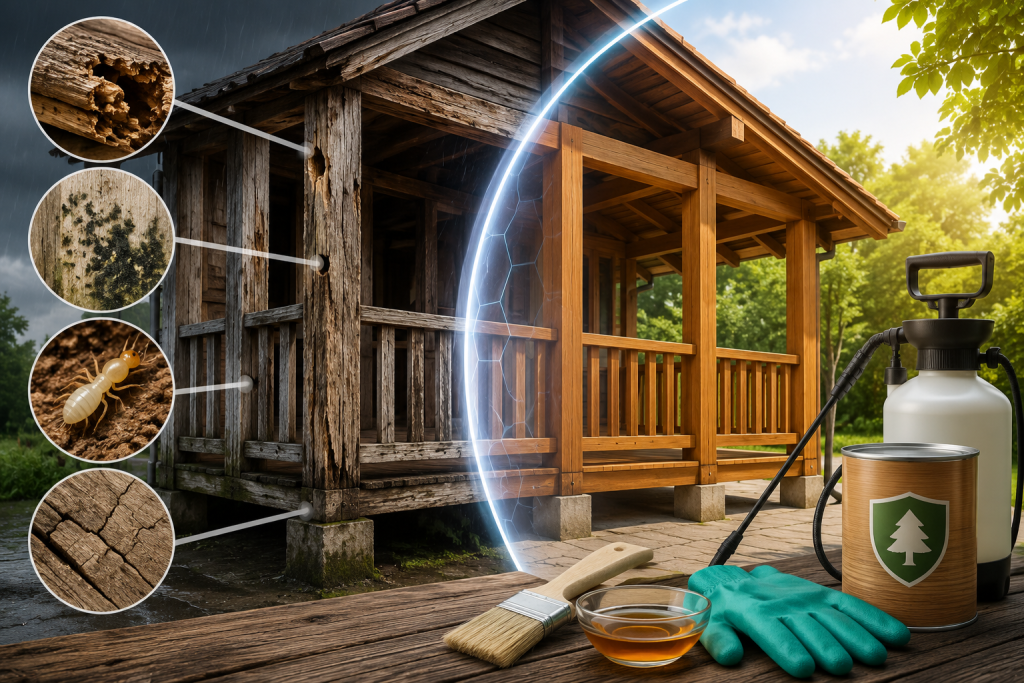
Timber has unique properties making it valuable in building homes in different ways. It provides structural support for building frames, makes attractive pergolas and even flooring outdoors. Moreover, there are many varieties of timber that provide an array of colours, textures and grains. As a result, the timber helps to link indoors and outdoors, creating an atmosphere conducive to spending quality time.
However, the vulnerability of timber has always been one of the primary concerns for homeowners. This organic product remains sensitive to different factors. For example, the weather in Australia changes drastically from region to region. Thus, while the coastal areas face constant high humidity, other regions can experience fire hazards and dryness. Understanding these issues will help you protect your house from any dangers.
Timber Vulnerabilities
It should be noted that the nature of the product itself makes timber particularly susceptible to some hazards. First, it is important to say that cellulose is a major component of wood. Cellulose represents a desirable food source for numerous organisms.
What’s more, being a part of a living tree, timber retains certain porosity and sensitivity to external factors after it is used in construction or any other purpose. In other words, it is capable of absorbing moisture from the air or rainwater. Excessive moisture will make the wood attractive for different forms of fungi and bacteria which will start breaking its fibres.
Apart from this, it is worth noting that wood is a combustible substance. Its density and variety determine how fast the timber will ignite. Therefore, you should think about it as far as Australia has a lot of extremely hot days in summer.
Main Threats for Australian Houses
Amongst various threats that timber faces, one can single out termite infestations. Known as white ants, termites can easily destroy wooden structures without any noticeable effects on the building in general. The fact is that these pests can dig tunnels underground and hollow structural timber from the inside. When you see this problem, you need termite treatment for wood ASAP.
Apart from this, wooden buildings may face problems due to fungal decay of wood. For instance, wet rot is caused by excessive moisture that stays in contact with wood for too long. Even dry places may be under the influence of certain fungi transporting moisture from the soil into timber.
Finally, you need to bear in mind the impact of environmental factors. UV radiation destroys wood, turning it brittle and dry, and creates many cracks and openings allowing more moisture and pests to enter the structures.
Protection Methods
Pest Protection
First, you need to think of ways to protect your house from termites. Conducting annual inspections with the help of professionals will allow you to detect termite nests before any significant damage. At the same time, chemical or physical termite barriers can be installed during construction or renovation of a building. Termite baits can be useful for extermination of foraging colonies.
Moisture Protection
It is necessary to protect the wooden structure from excessive moisture to avoid fungi development in timber. To achieve this, one needs to apply appropriate sealants, such as oiling, painting or varnishing timber structures to prevent the wood from contacting moisture. However, it should be noted that these coatings wear off in time, requiring application at least every several years.
At the same time, drainage and ventilation near your home will minimise the possibility of the accumulation of moisture near wooden constructions.
Fire Protection
It should be noted that one cannot guarantee fire protection of timber. Nevertheless, using specific products applied to surfaces and increasing the time of ignition may help. Fire-resistant paint and varnish will not allow the flame to spread quickly. Furthermore, homeowners from risky regions should pay special attention to maintaining their property, eliminating dry leaves and cutting unnecessary plants growing near timber constructions.
Maintaining Your Timber
In conclusion, it is necessary to note that the protection of wooden structures is a rather complex process that requires constant monitoring. Understanding the threats that you face, you will easily identify possible solutions to them.
So, begin with arranging an inspection of your house this season and then make sure that you maintain your timber by protecting it from possible hazards. With timely action, you will keep your wood in excellent condition for generations.